
Congratulations, Birdie! What a Wound Vac Shortage Teaches Vet Hospitals About Inventory
Birdie's recovery stalled when her hospital ran out of wound vac dressings mid-therapy. Here's why that happens — and how real-time inventory and lead-time tracking help vet hospitals know whether they can take on a case.
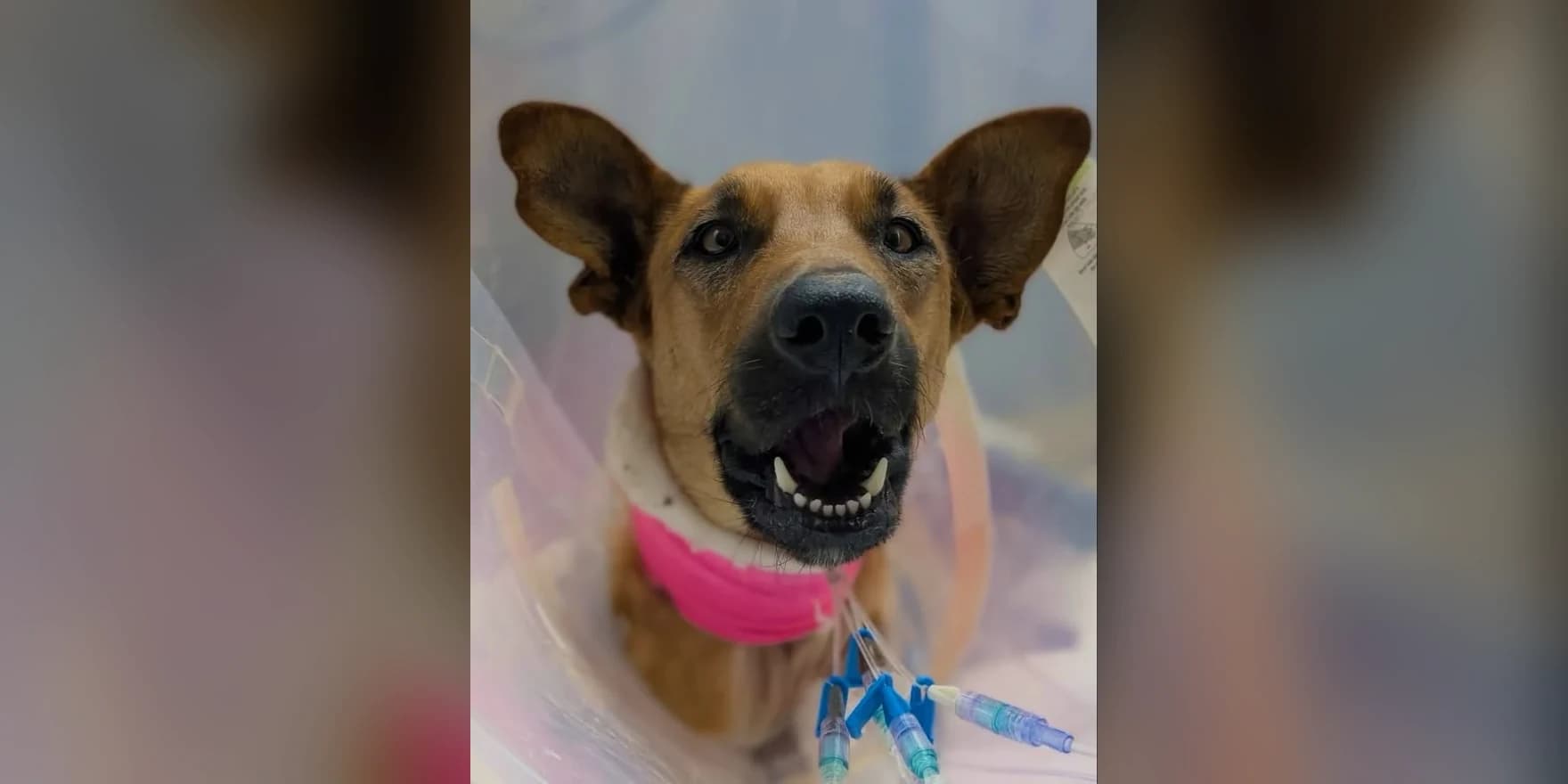
Congratulations, Birdie! Expedition Ola has successfully gotten Birdie off the streets, out of the hospital, and on her way to finding her forever home. After surviving the amputations of her legs and tail, one really big problem stood in the way of her recovery, and it wasn't simply that the wound needed help healing. The bigger problem was that the hospital that assured Expedition Ola they could help ran out of supplies. We at Sitehound were following Birdie's story on the edge of our seats, hoping for the best.
Many people who know what we do at Sitehound were asking, "How could this happen? How could a hospital tell them they had enough supplies to run a wound vac for 5 days, but really only have enough to quit mid-therapy (in the middle of day 2) because they'd already run out of supplies?"
If you've ever used a wound vac, you know that in theory you'll only need one bandage per day. But even humans have a hard time using one bandage per day, because the sticky, Saran Wrap-like seal sticks to itself and has to be applied to the exact spot the first time in order to work properly. Trying to do that on a very mobile dog is nearly impossible.
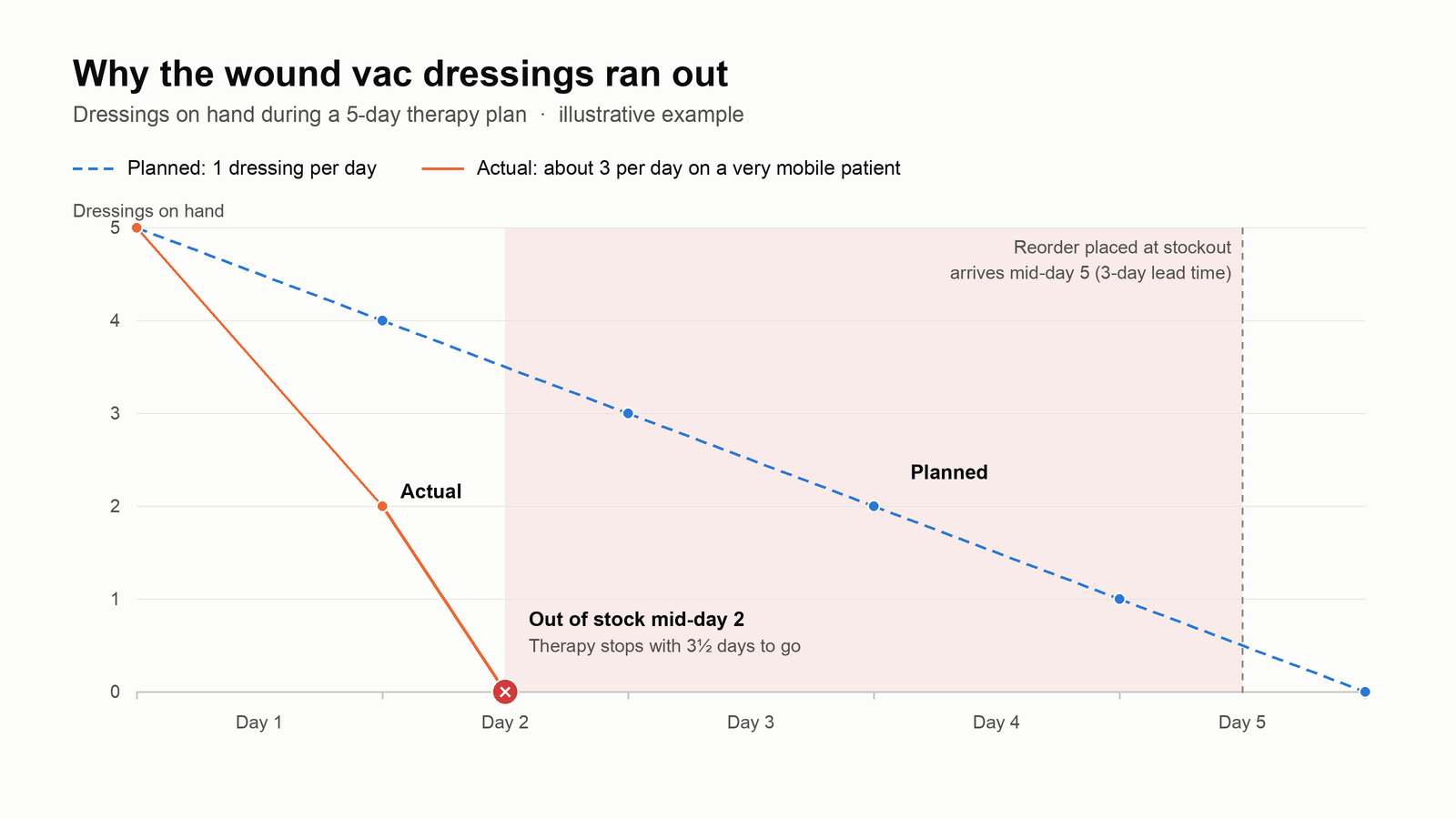
Illustrative example: planning for one dressing a day versus what a very mobile patient actually uses.
First you have to take into account where Birdie's wound was. Her Saran Wrap basically covered her entire back end. So waste alone would mean changing the bandage more than once per day. Also, because she has no hind legs, when she did move around, she was dragging the bandage behind her, which meant continuous ripping. Couple that with its ability to bind to itself and you've got a real tangle happening back there. All of this accounts for a lot of bandage changes.
We can't speculate on which hospital made this miscalculation, but in our experience, vet hospitals are turning to Sitehound for help with their own poorly run inventory systems, or are simply relying on a person whose specialty is not inventory. Often, a vet tech has been told, "You will spend the first two hours of every shift doing inventory;" meanwhile, they're being pulled from that task to help with other emergencies. Simply eyeballing the number of bandages in stock cannot help, because how does anyone really know exactly how many bandages are needed? Wound vacs aren't used every day, and if your practice has a new one that has only been used once and you're down to your last pack of five bandages, even if your new inventory guru knows to order more immediately, how do they know whether the newly ordered bandages will arrive on time?
Enter Sitehound. We give animal hospitals an advantage in this situation by, first, telling you to order more bandages immediately. Sitehound has recorded your data in its history. Sitehound knows that your hospital or clinic typically uses more than one bandage per day and that you need more right away. Sitehound also notes the lead time needed to receive supplies, so this hospital could have answered that no, they didn't currently have enough supplies, and would not have even offered to take on Birdie's case.
Birdie ended up being transferred to a university vet hospital where they knew how much they had, how much they needed, and where to get it. It's SO easy to think you have enough when you actually don't. With Sitehound, you don't have to think. Sitehound counts in real time and gives real answers about how you can respond to and prepare for emergencies.
To quote Expedition Ola itself: "We can't change yesterday with what we know today. But we CAN use everything we've learned to decide what comes next."
Sitehound looks at your yesterday in real time.
Sitehound tells you if you have enough and when to order more.
Sitehound helps you decide what comes next.
Best of luck, Birdie. And a huge shout-out to the magnificent humans of Expedition Ola, getting dogs off the street and healing not just their wounds, but their hearts.
See how Sitehound Vet uses your practice's own usage history and supplier lead times to tell you what to reorder — and when.